Home Health Services
Parents or legal guardians can be paid to be a licensed home health aide
If your loved one with autism has Medicaid, they may be eligible to receive Home Health Services.
Through a Medicaid-enrolled Home Health Services provider, a parent or legal guardian may be able to become a paid, licensed Home Health Aide (HHA) for their loved one with autism. This can provide families with additional support while allowing the individual to receive care in the comfort of their own home.
Medicaid Prior Authorization (PA), sometimes referred to as Medicaid PA, means that Medicaid must approve certain medical goods or services before they can be provided.
Important:
Home Health Services are separate from Medicaid waiver programs.
Receiving Home Health Services does not reduce or affect an individual’s waiver budget or waiver services.
Qualifications for Home Health Services
Home Health Services may be available to individuals of any age with autism and other disabilities when the following requirements are met:
- The services are medically necessary.
- The services are ordered in writing by a licensed practitioner, such as:
- Physician
- Nurse practitioner
- Clinical nurse specialist
- Physician assistant
- The services are provided according to a written plan of treatment.
- The services are provided on a part-time and intermittent basis.
Finding a Home Health Service Provider
Once you have determined that your loved one with autism may qualify for Home Health Services, the next step is to find a Medicaid-enrolled Home Health Services provider. A provider can help determine eligibility, complete the necessary paperwork, and explain how many hours of Home Health Services your loved one may be approved to receive.
Each Home Health Services provider may have different requirements, training procedures, and hourly pay rates for individuals who become Home Health Aide (HHA).
If a parent or legal guardian plans to become an HHA for their loved one, ask the provider about their specific training and certification requirements.
For example, HHA training may include approximately 20 hours of online video-based training followed by a week of in-person, hands-on training. HHAs may also be required to maintain CPR certification and complete drug screening and tuberculosis (TB) testing.
* Because requirements and pay rates can vary by provider, it is important to contact several Home Health Service providers to compare their processes, training requirements, available hours, and compensation.
What to Expect when Home Health Services Begins
If you become a Home Health Aide (HHA) for your loved one with autism, you will be expected to remain in the home and provide care during your approved Home Health Service hours. You cannot leave the home to run errands, attend appointments, or take care of other activities during those scheduled hours.
Schedule
Work with your Home Health Services provider to create a schedule that works well for your family and meets your loved one’s needs. Your provider will also explain the specific responsibilities and expectations for your role as an HHA.
Oversight
A Registered Nurse (RN) will be assigned to oversee your loved one’s care plan and Home Health Services. The RN will make regular visits to the home, typically every couple of months, to monitor services and ensure the care plan is being followed.
Record Keeping
Depending on your Home Health Services provider, you may be required to use an app or electronic system to record your hours and document information about the care you provide. Be sure to keep accurate records and complete all required documentation according to your provider’s guidelines.
Home Health Aide Care Services
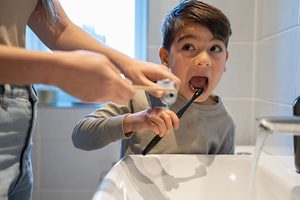
The level of care and services provided through Home Health Services will be based on your loved one’s individual needs and approved care plan. As a Home Health Aide (HHA), you may assist your loved one with autism with a variety of Activities of Daily Living (ADLs) and personal care tasks.
Examples of services may include:
- Skin care – Assisting with routine skin care and monitoring for changes or concerns.
- Hair care – Helping with brushing, grooming, and other basic hair care needs.
- Toileting assistance – Providing support with toileting and related personal care.
- Hygiene care – Assisting with daily hygiene routines.
- Showering assistance – Providing support and supervision during bathing or showering.
- Mouth care – Assisting with brushing teeth and maintaining good oral hygiene.
- Dressing – Helping your loved one select clothing and get dressed or undressed.
- Meal preparation – Preparing meals and snacks according to the individual’s needs.
- Feeding assistance – Helping with eating and drinking when needed.
- Checking pressure points – Monitoring areas of the body that may be at risk for skin irritation or pressure-related concerns.
- Encouraging fluid intake – Reminding and encouraging your loved one to drink adequate fluids.
- Medication reminders – Providing reminders to take medications as directed, when this is included in the approved care plan and permitted by the provider.
The specific tasks an HHA may perform will depend on your loved one’s assessed needs, physician’s orders, approved plan of care, and the policies of the Home Health Services provider.